Key points
- What a photograph shows is not a materials analysis result.
- XRF investigates elements; it does not directly provide a year of manufacture.
- A test claim must connect to an identified sample and a stated method.
Describe Somdej amulet materials through observation
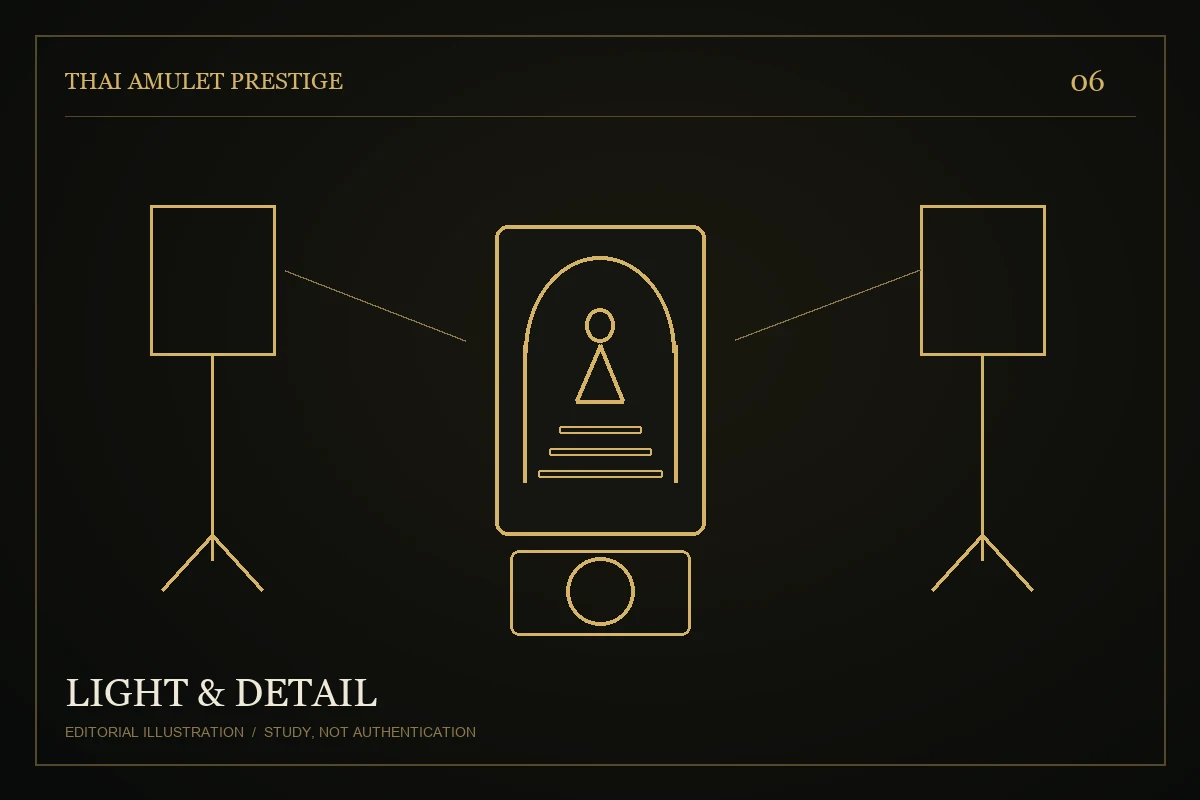
Somdej amulet materials are discussed using many specialist terms. Before judging a surface as “old”, “dry” or “mature”, begin with more direct descriptions: a pale surface, dark spots in a particular area or a crack visible in a reverse photograph.
These observations do not yet explain causes. State whether they come from photographs or the object itself. For photographs, sharpness, lighting and file adjustments are limitations to retain with the observations.
What does XRF investigate?
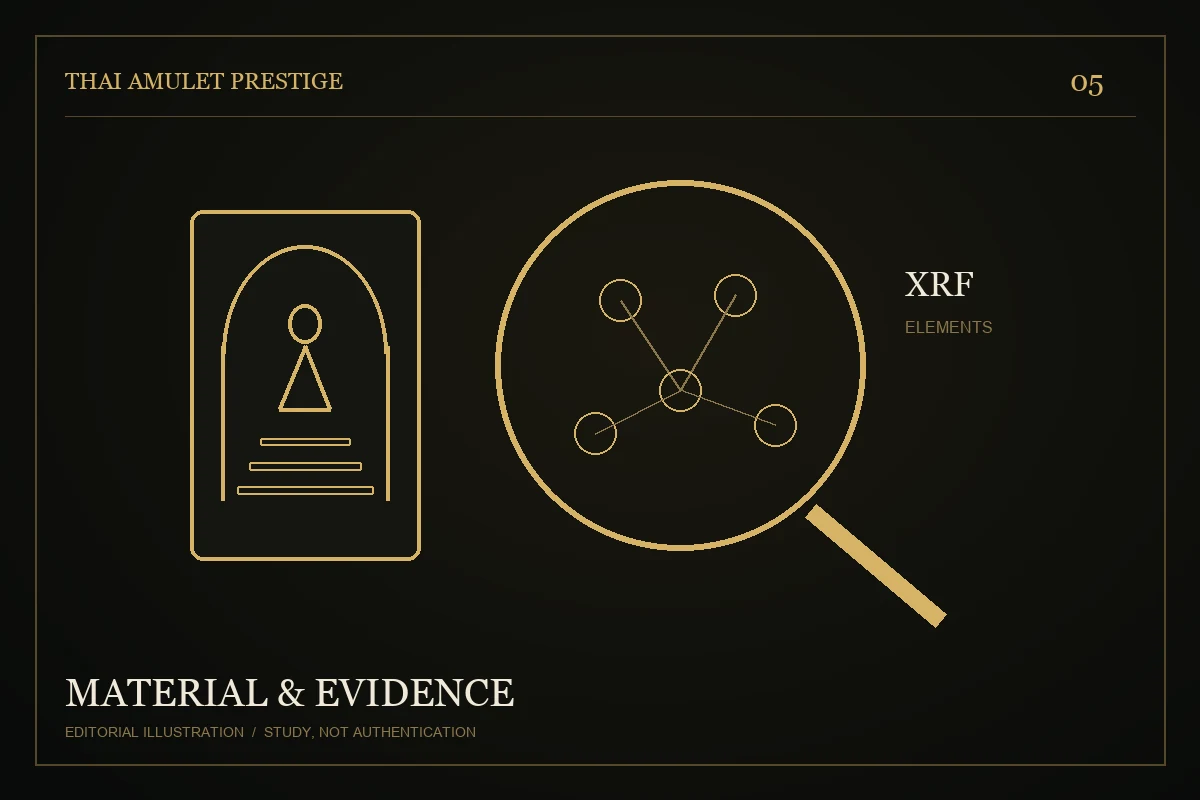
The IAEA describes the use of X-ray fluorescence, or XRF, to study materials, including cultural heritage objects [1]. In broad terms, the technique uses X-ray information associated with elements to help characterise the composition of the area examined. Other techniques may also be used according to the research question and the sample’s limitations [2].
The editor’s interpretation is that a list of elements does not directly provide a production date, maker or place of origin. Connecting materials results to those conclusions requires a study design, comparative information and reasoning open to examination.
Why numbers alone are not enough
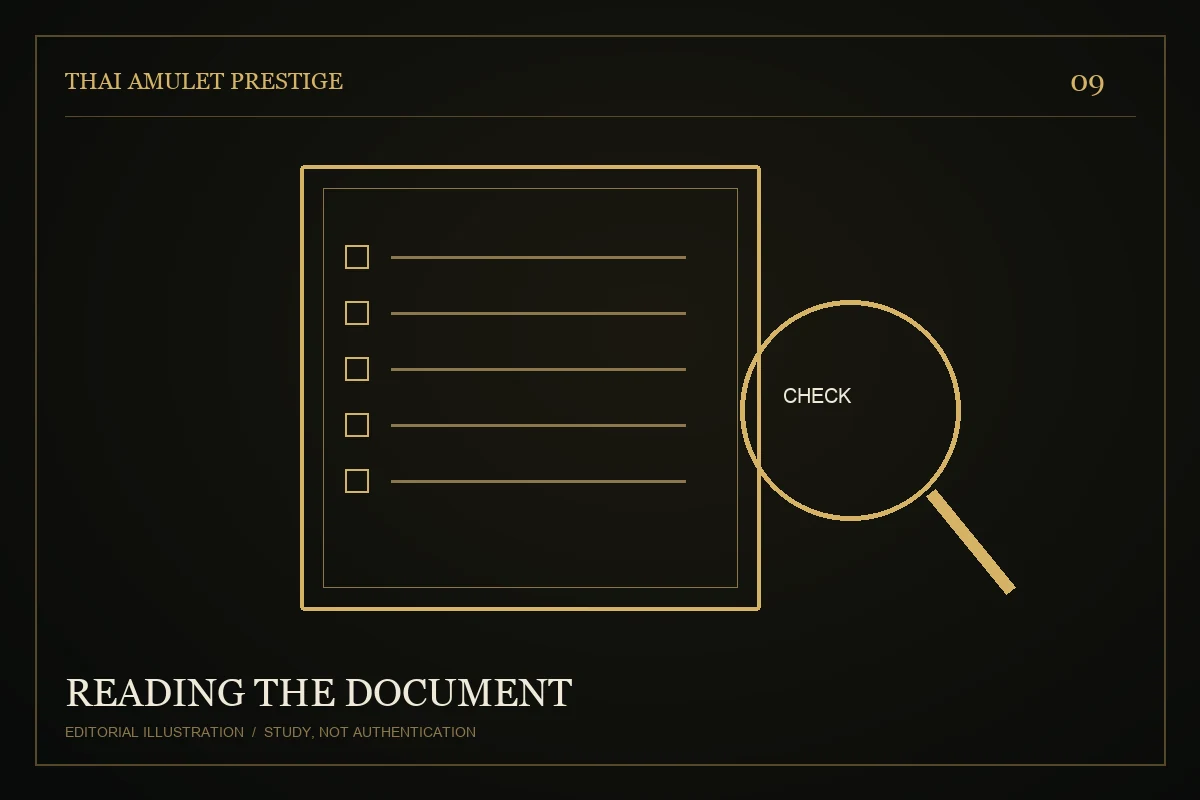
A document with graphs or tables can look persuasive. Yet without knowing which object, area or method was examined, the reader cannot connect it to the amulet being viewed. Read the method, laboratory, sample ID, examination date and report scope before its conclusion.
Ask whether coatings, a frame, dust or repairs may affect the examined area. Answers should come from the examiner and the method actually used, rather than guesses based on a repeatedly forwarded report image.
From elemental results to claims about a recipe
Detecting an element should not immediately be presented as proof of a particular ingredient described in tradition. Elements, compounds, material sources and age are questions at different levels. Linking them requires an explicit account of the assumptions involved.
Likewise, some shared elements in two samples are insufficient to establish the same maker. Writers should always separate the laboratory’s reported findings from their own additional interpretation.
Before sharing a test result
The following is the editor’s report-reading checklist, not an amulet certification requirement issued by the IAEA or any laboratory.
- Do the photographs and sample ID connect the report to the object now being discussed?
- Are the method, measurement locations and limitations stated?
- Does the social-media summary agree with the full report’s conclusion?
- Does the post claim an age or maker that the report did not investigate?
Preserve the object while studying its materials
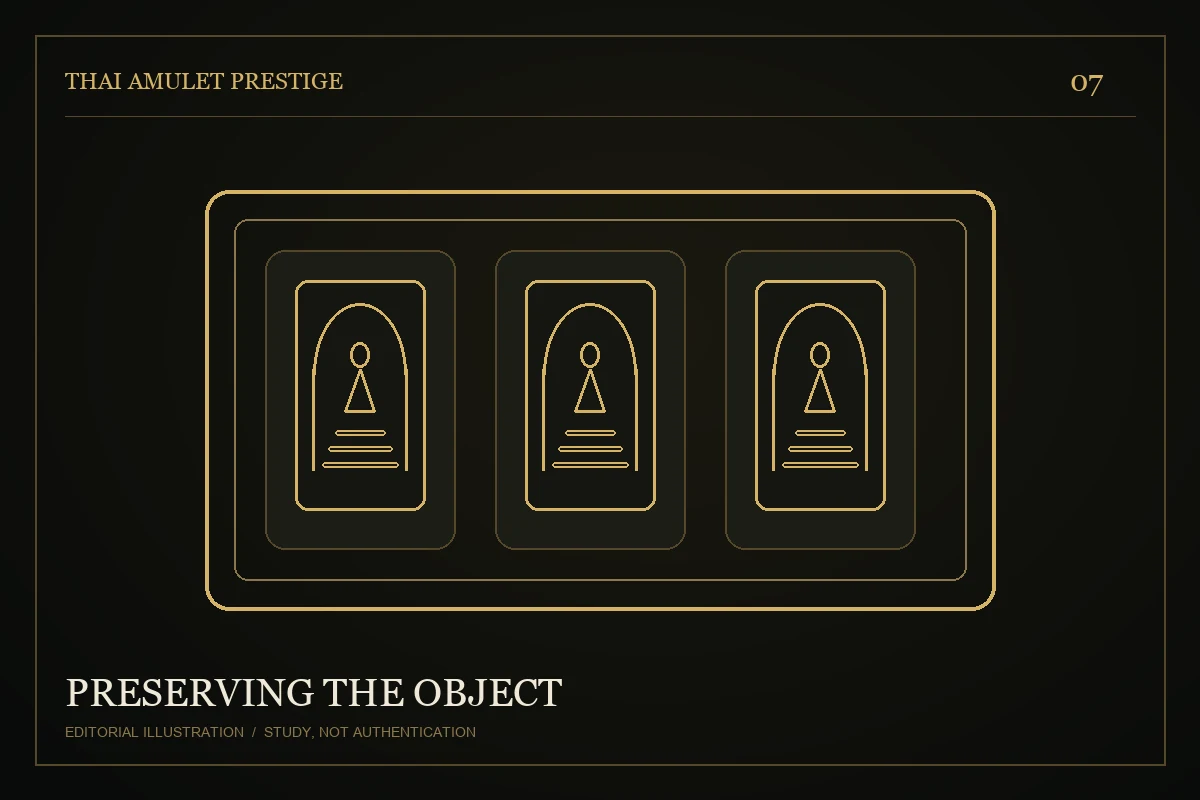
Do not scrape, drill, soak or apply chemicals simply to test the material yourself. For a fragile surface or unknown mixture, seek suitable specialist advice before selecting an examination method. Ask in advance which parts the examination will touch or alter.
Sources & further reading
- X-Ray Fluorescence — IAEA Nuclear Science and Instrumentation LaboratoryThe use of XRF to investigate materials and cultural heritage.
- About accelerator-based techniques for the study of cultural heritage — IAEAElemental analysis and the complementary use of several techniques. The limits on attributing production origin are the editor’s interpretation.
- Caring for archaeological collections — Canadian Conservation InstitutePreventing physical impact and preserving the association between objects and their documentation.
Translated and adapted from the Thai article compiled by Thai Amulet Prestige, using the listed sources and the editor’s study suggestions. This is not an authentication report for an individual amulet. The Thai source edition records its source check as 3 November 2026. Illustrations do not establish an amulet’s age, maker or authenticity.