Key points
- A checkable ownership history needs sources and a timeline.
- Gaps should remain visible until evidence becomes available.
- Object identification documents are not equivalent to authentication.
What does Somdej amulet provenance mean?
Somdej amulet provenance is part of object study that is often reduced to a short story. In museum work, provenance means the history of an object’s ownership from the past to the present. The Smithsonian explains its contribution to understanding objects and collection contexts [1].
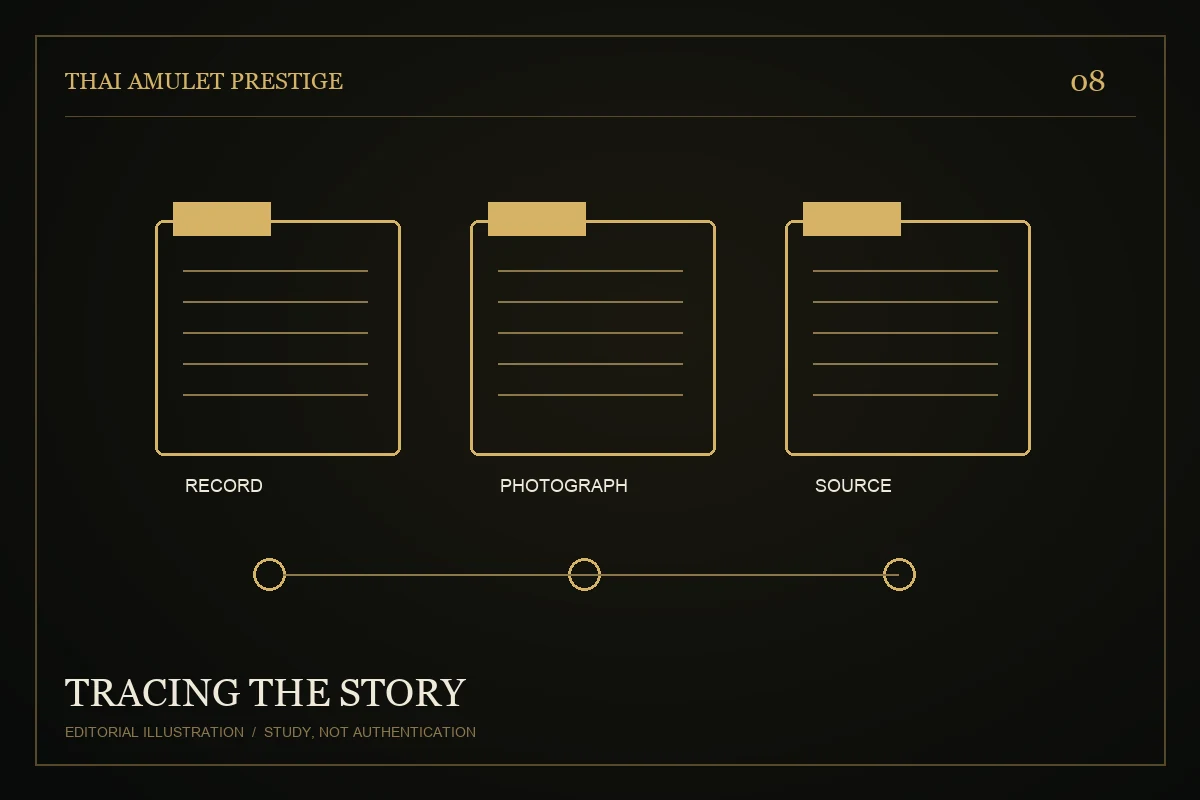
For amulets, a family account may be a valuable starting point. A traceable file should show the source of each period’s information, whether an old photograph, a document or an oral account recorded with its date and informant.
Separate the object’s timeline from the documents’ timeline
A document created today may describe an event decades earlier. Its creation date and the claimed event date belong in different fields. Combining them can make a reader mistakenly think the document was contemporary with the event.
Try two columns: “event claimed” and “evidence currently available”. Give each its own date and source. If a copied photograph has no known shooting date, write “unknown” instead of estimating from the apparent age of the paper.
Use an object ID to keep information connected
ICOM describes Object ID through information such as materials, dimensions, marks and distinctive features, together with photographs and descriptions [2]. These principles can guide a personal amulet file, provided they are understood as object-recording guidance rather than an amulet authentication system.
Choose an ID that does not change with the type name. If later opinions differ about classification, the same ID will still connect the photographs and documents. Avoid building changing prices, current owners’ names or the word “authentic” into the identifier.
What belongs in an individual file?
The following is the editor’s suggested starting structure. Extend it as needed and according to disclosure permissions.
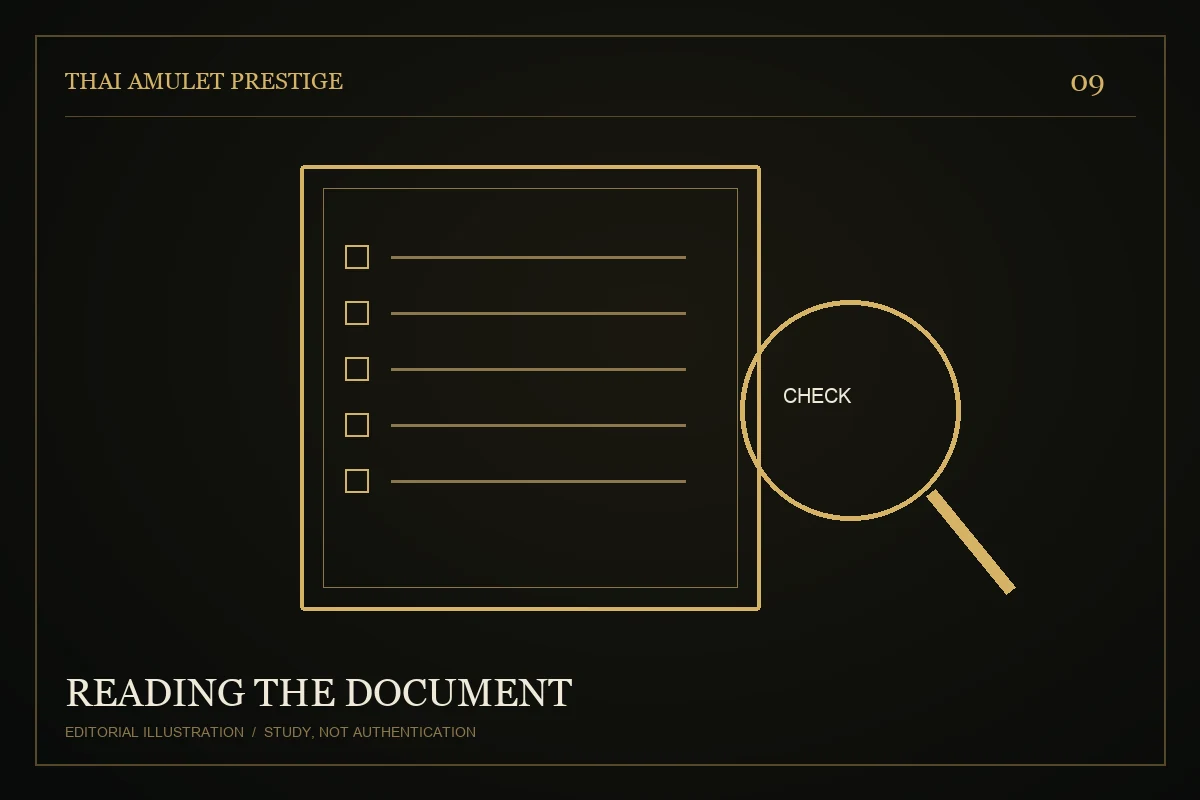
- Summary: ID, names used in different documents, dimensions and observable condition.
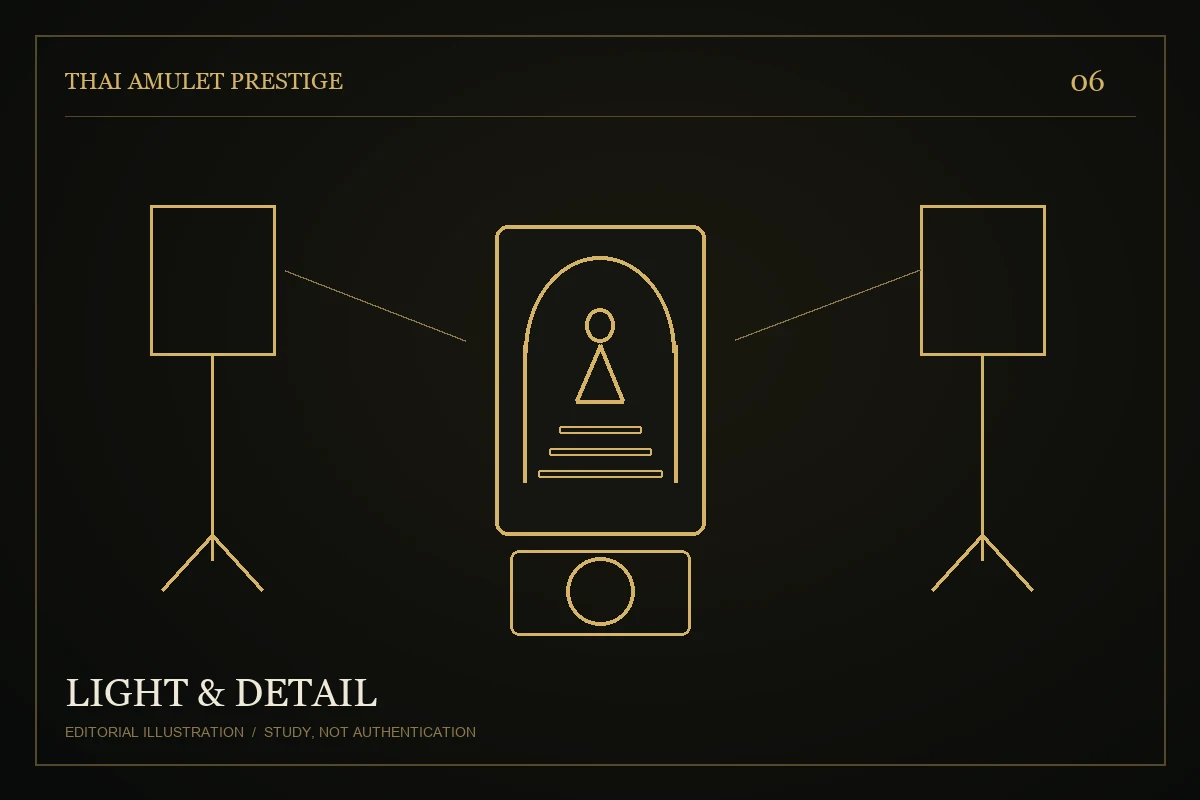
- Images: front, reverse, edges, details, shooting dates and file sources.
- Ownership timeline: confirmed information and periods supported only by accounts.
- Attachments: document copies, original links and an explanation of which object they concern.
- Revision history: dates, informants and reasons for changing descriptions.
Publish only what you may disclose; store full copies safely
Transaction documents may contain names, addresses, telephone numbers or other details unnecessary for a public article. Separate internal copies from publication copies and check image rights before uploading. Mark redacted copies clearly instead of making them look as though the removed information never existed.
INTERPOL presents Object ID as a tool to help identify objects that are lost or stolen [3]. An appropriately backed-up file can therefore be useful beyond collection display. Do not claim that a personal file has been endorsed by that organisation.
Does an organised file mean the history is complete?
Not necessarily. Organisation makes questions easier to investigate; it does not turn unsupported periods into facts. Record uncertainty openly and update the file when new evidence appears, retaining a revision history.
Sources & further reading
- Provenance — Smithsonian National Collections ProgramThe meaning of ownership history and its role in object research. The Thai edition checked text in the original site’s search results because the full page returned an error during that check.
- Object ID — International Council of MuseumsObject identification fields, photographs, descriptions and safe records; not an authentication standard.
- Object ID — INTERPOLRecording information to identify objects and assist in cases of loss; not an amulet authentication database.
Translated and adapted from the Thai article compiled by Thai Amulet Prestige, using the listed sources and the editor’s study suggestions. This is not an authentication report for an individual amulet. The Thai source edition records its source check as 3 November 2026. Illustrations do not establish an amulet’s age, maker or authenticity.