Key points
- Ask a specific question before reading large amounts of information.
- Keep sources and limitations with every conclusion.
- Learn from differing opinions without rushing to choose a side.
Start Somdej amulet study without answering everything at once
Somdej amulet study can feel difficult because it combines vocabulary, reference images, stories and conflicting opinions. A practical beginning is one small question: understanding different names, for example, or completing a documentation image set. Authenticating every object need not be the initial goal.
This plan is the editor’s learning approach, not an organisation’s course or certification examination. Adapt it to the time and information available.
First, classify the sources you are reading
Organise reading into history and culture, specialist books or articles, individual object images and records, and students’ or collectors’ opinions. This makes it easier to see why a biography cannot answer every question about a particular object’s present condition.
Chulalongkorn University Library has a catalogue entry for a book on Somdet To as a starting point for further research [1]. Record its bibliographic details and distinguish seeing a catalogue from reading the full work so you do not inadvertently cite unchecked contents.
Practise description before opinion
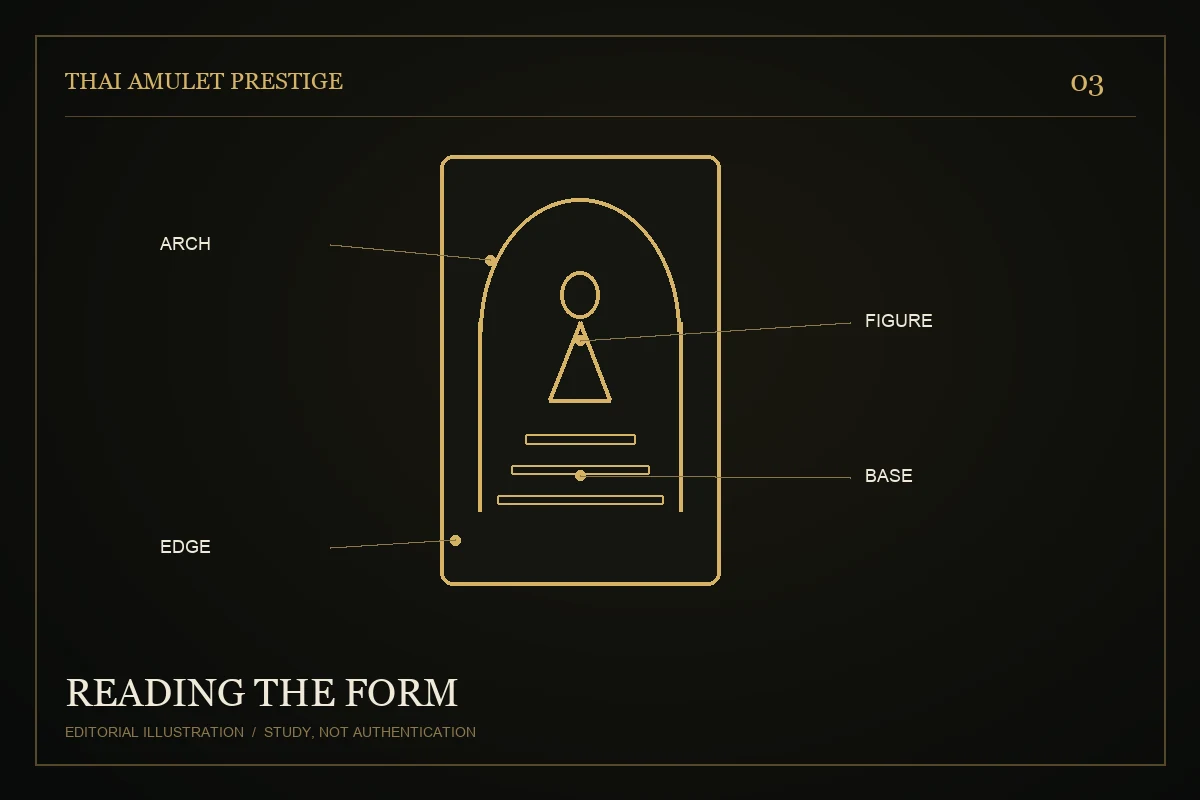
Choose an image with clear usage rights and a source. Write plain observations: the front is angled, the left edge is cropped or a section of the base is missing. Then note questions that would improve understanding. This shows which information an opinion relies on.
Structured description is consistent with object-data standards discussed by Getty [2]. A personal table need not be complicated. Begin with a few fields you can actually complete, adding others when necessary.
Use a four-part notebook
Using the same format across topics makes comparison easier and leaves room to change an interpretation when new information appears.
- Question: what do I want to understand today, and what would count as a sufficient answer?
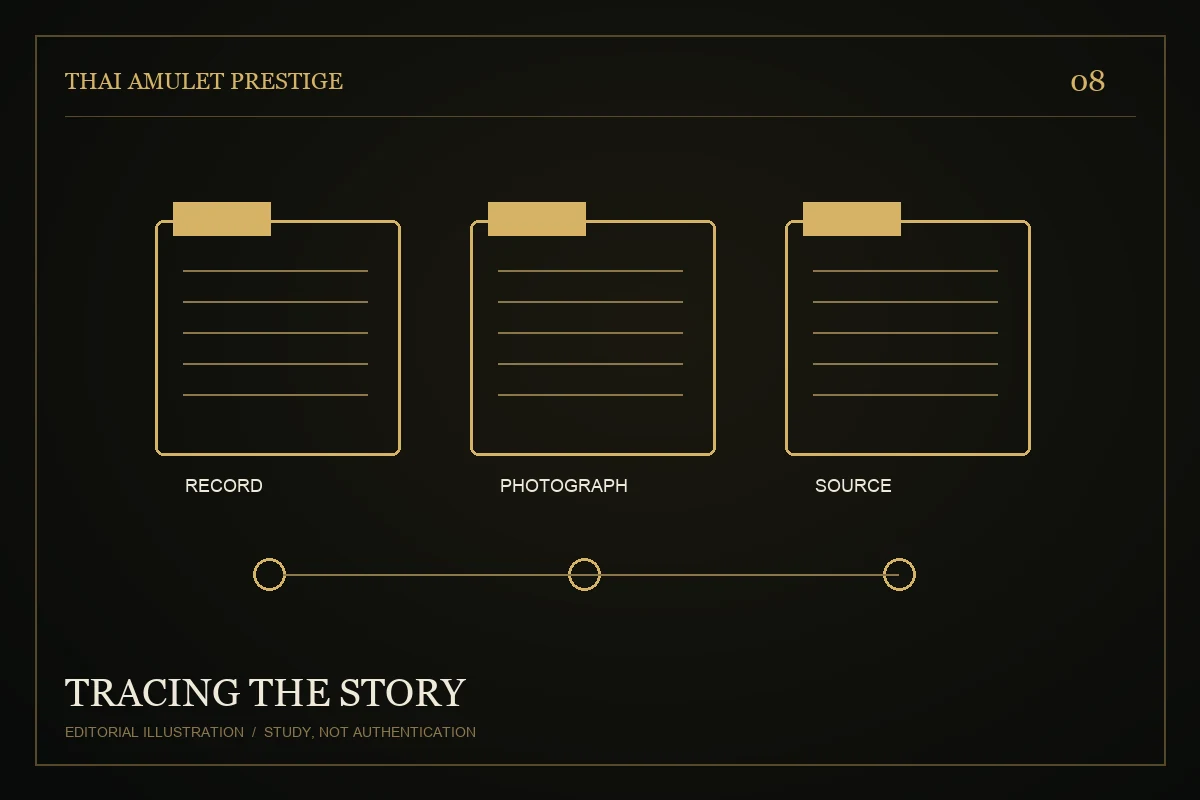
- Information: checkable text, photographs or documents, with source and date.
- Opinion: whose interpretation is this, with what reasoning and limitations?
- Next step: request another photograph, locate the original book or ask the relevant person.
When opinions conflict, narrow the question
Rather than deciding which side is wholly right, ask whether both use the same word in the same sense, examine the same image set and discuss an individual object or a group’s history. Some disagreements may reflect unequal information.
Keep dates and informants with opinions, subject to permission. Do not substitute someone’s name for a reasoned argument, or change a source’s uncertain wording into a definite claim in your own record.
Measure progress through better questions
After reading the series, ask whether you can explain terminology more clearly, take comparable photographs and identify more of the gaps in your own file. Being able to state what remains unknown is meaningful progress.
When publishing, include source links, distinguish actual photographs from explanatory artwork and update information when new evidence appears. Good learning does not need to end with more certainty than the evidence permits.
Sources & further reading
- Catalogue: Biography of Somdet Phra Phutthachan (To) — Chulalongkorn University LibraryThe existence of a book compiled and edited by Phra Khru Kanlayanukul. Further-reading route only; no claim to have read the full volume.
- The CDWA and Other Metadata Standards — Getty Research InstituteStructured description and object-identification information.
- Object ID — International Council of MuseumsObject identification fields, photographs, descriptions and secure record keeping; not an authentication standard.
Translated and adapted from the Thai article compiled by Thai Amulet Prestige, using the listed sources and the editor’s study suggestions. This is not an authentication report for an individual amulet. The Thai source edition records its source check as 3 November 2026. Illustrations do not establish an amulet’s age, maker or authenticity.