Key points
- Study the history of the temple separately from the history of an object.
- Collector terminology is not always contemporary historical documentation.
- An attractive photograph or story cannot authenticate an individual amulet.
What does Somdej Wat Rakhang mean?
Somdej Wat Rakhang is a name encountered in amulet histories, collectors’ conversations and online displays. A useful starting point is to ask two questions together: which group does the name describe, and what evidence supports applying it to the particular object being viewed?
The Thai Cultural Encyclopedia in the Princess Maha Chakri Sirindhorn Anthropology Centre database associates Somdej Wat Rakhang with Somdet Phra Phutthachan (To Phrommarangsi). It also notes that widely used temple-based group names came into use later [1]. This provides context; it does not place every rectangular amulet in the same historical period.
Look beyond the familiar amulet photograph
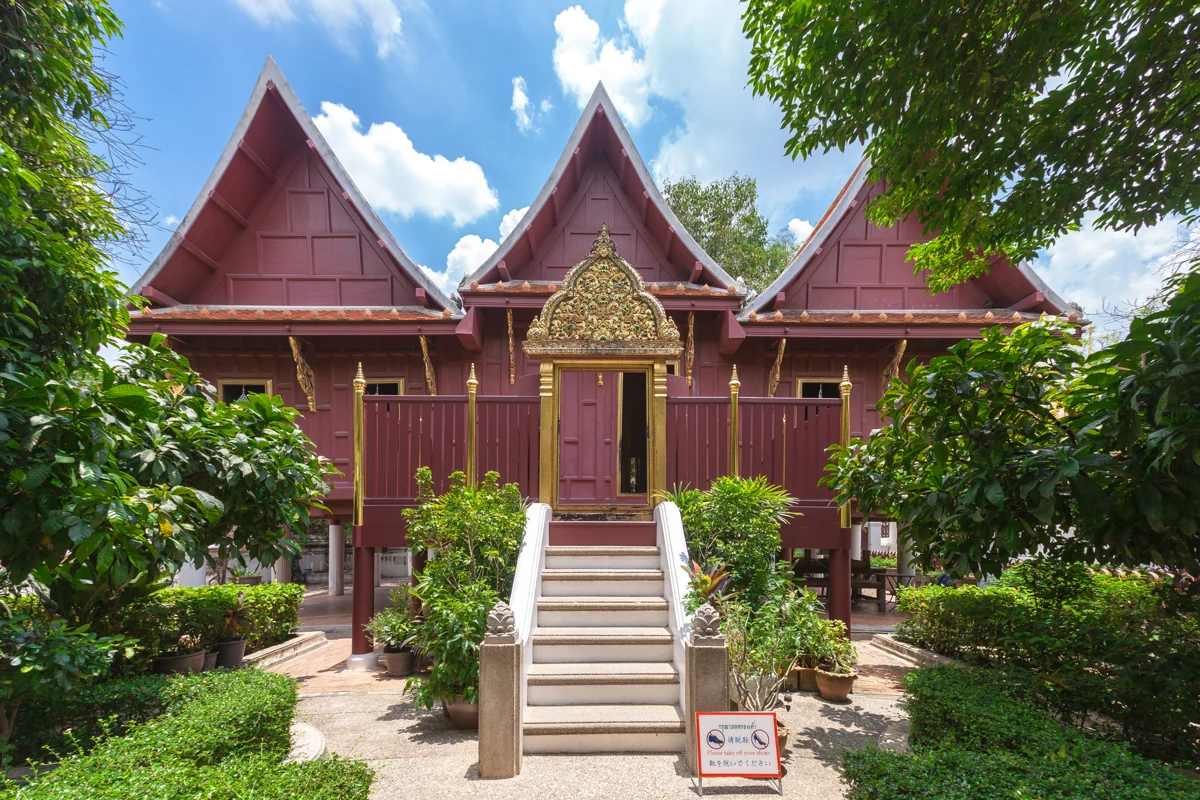
Wat Rakhang Khositaram belongs to the cultural landscape of Bangkok Noi and the Chao Phraya riverside. The Southeast Asian art database records its former name, Wat Bang Wa Yai, and describes the three adjoining timber buildings of its scripture library, associated with the former residence of King Rama I [2]. Studying the place adds perspectives on craftsmanship, religion and society that a product photograph cannot provide.
However, the age of a temple does not automatically establish the age of an amulet. When reading a description, identify whether it concerns a temple, a person, a ceremony or the specific object pictured.
General history and individual provenance answer different questions
A general history may explain the relationship between a monk and a temple well. An individual object’s history requires other evidence: are there older photographs identifying this same piece, which periods of ownership are recorded, and how closely do the cited documents correspond to its present condition?
If an account says only that the piece was inherited from an elder, without traceable dates, photographs or documents, record it as an account. Do not fill the gaps with assumed facts. Writing “not yet known” is more useful than constructing a complete history without evidence.
Respect belief while examining historical claims
Faith forms part of amulet culture. It is possible to respect religious belief while questioning historical assertions. Statements about spiritual significance should be distinguished from claims about a maker, date or place of production, which require different kinds of evidence.
When a claim sounds definitive, ask who made it, when it was made, which document it cites and whether it concerns the same object. Accounts of spiritual efficacy should not replace evidence identifying an object.
Start a simple study file
The following is the editor’s suggested learning method, not a test of authenticity. Begin with information that can be checked again before adding hypotheses.
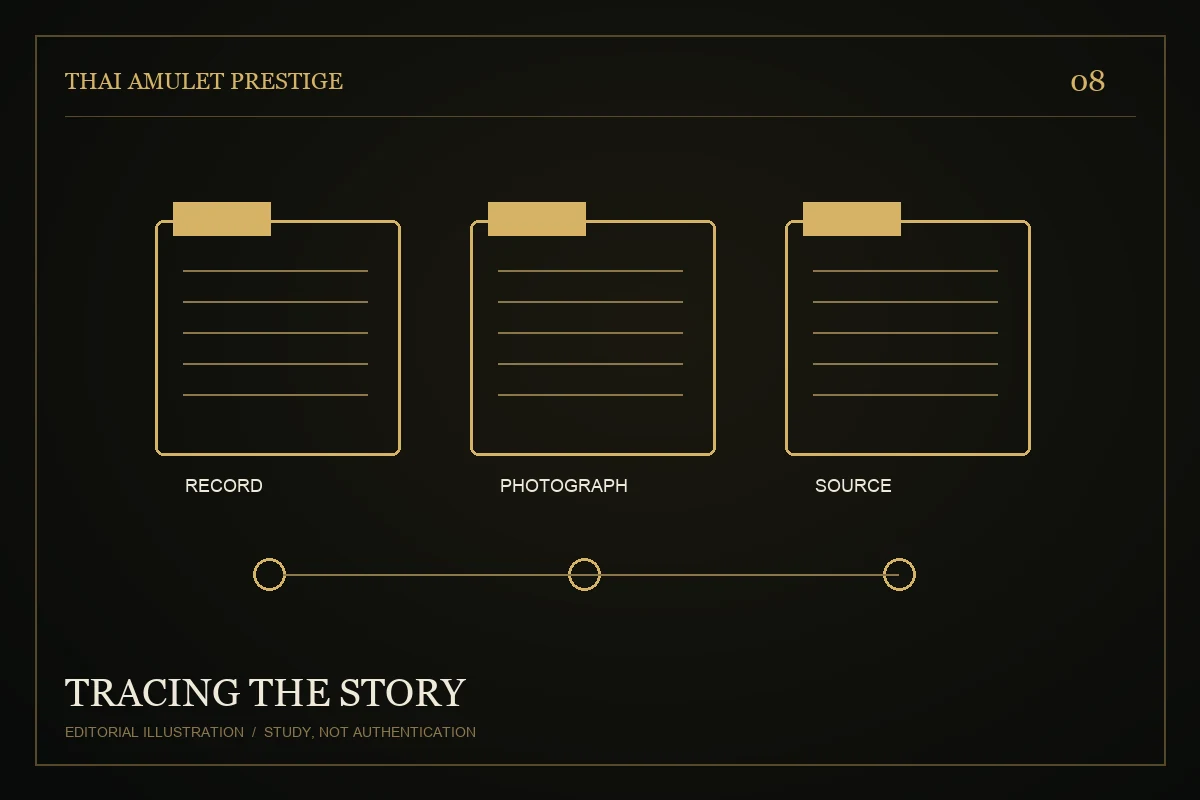
- Record the name used by the owner or document, retaining “claimed to be” where identification remains unverified.
- Keep front, reverse, edge and overall photographs, with dates and file sources.
- Use separate fields for observations, supporting documents and questions still to investigate.
- Connect each photograph and document with one record ID rather than relying only on a type name.
Can reading history establish authenticity?
No. History helps frame better questions, but identifying an individual amulet still requires examination of the object and relevant evidence. This article introduces context; it does not provide authentication or valuation services.
Sources & further reading
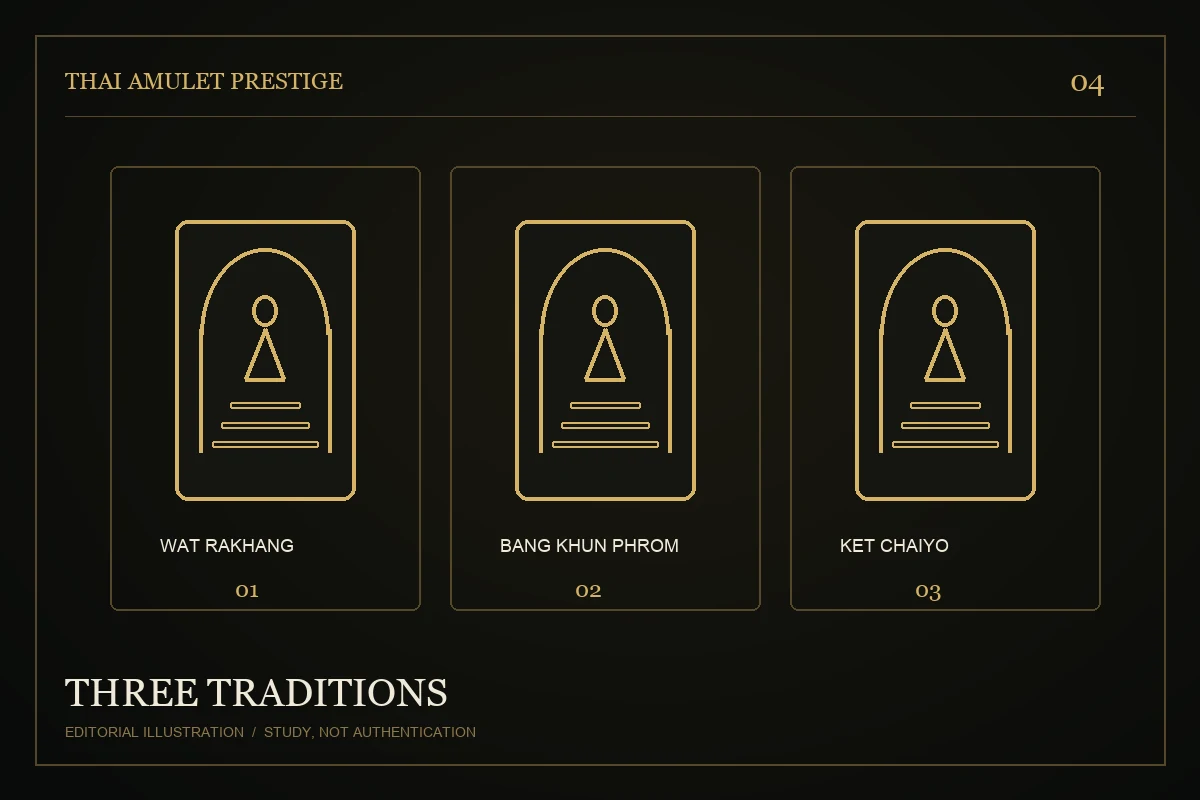
- Amulets — Thai Cultural Encyclopedia, Sirindhorn Anthropology CentreAn overview of Somdej terminology and the Wat Rakhang, Bang Khun Phrom and Ket Chaiyo groupings. A compiled reference, not evidence authenticating an individual amulet.
- Scripture Library, Wat Rakhang Khositaram — Southeast Asian Art DatabaseLocation, the three adjoining timber buildings and the connection with King Rama I. Historical facts are referenced; database photographs and descriptions are not reproduced.
Translated and adapted from the Thai article compiled by Thai Amulet Prestige, using the listed sources and the editor’s study suggestions. This is not an authentication report for an individual amulet. The Thai source edition records its source check as 3 November 2026. Illustrations do not establish an amulet’s age, maker or authenticity.