Key points
- Separate temple-group names from names describing form.
- The name Phra Somdej does not always mean Wat Rakhang.
- Deposits or base tiers alone cannot establish where an amulet was made.
Wat Rakhang, Bang Khun Phrom and Ket Chaiyo are distinct names
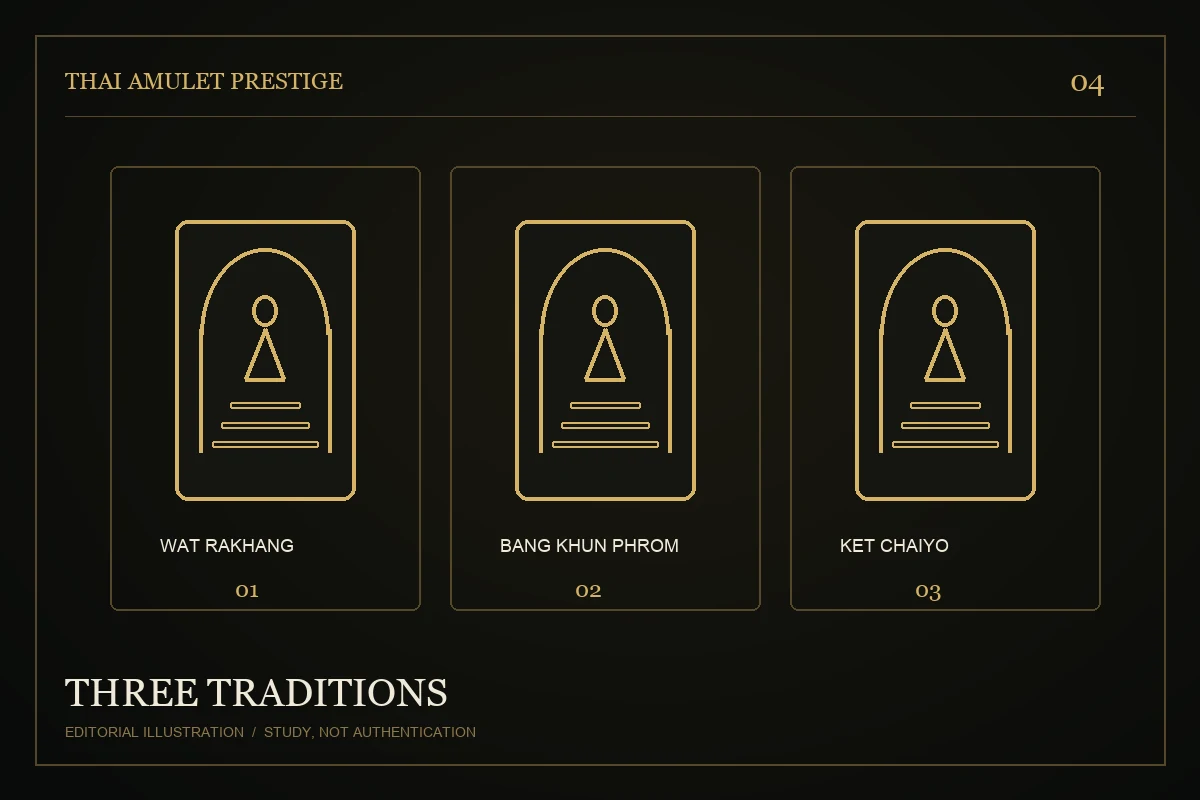
Wat Rakhang, Bang Khun Phrom and Ket Chaiyo are often discussed together. The Thai Cultural Encyclopedia describes groupings associated with different temple histories [1]. Treat the names as starting points for finding evidence rather than interchangeable labels.
The same reference observes that amulets called Phra Somdej have also been made at many other temples [1]. A product title, photograph or old box labelled “Phra Somdej” therefore does not establish its temple or period of production.
Wat Rakhang and the association with Somdet To
Accounts of Wat Rakhang often connect it with Somdet Phra Phutthachan (To). Avoid jumping from this general history to identifying an individual amulet. Establish whether the description concerns a group in a book or an object supported by its own records.
In a personal file, keep the owner’s name for the piece, the name in documents and later opinions separate. This makes changes in identification visible without allowing the latest account to replace the entire earlier history.
Bang Khun Phrom: a repository claim needs context
The encyclopedia discusses Bang Khun Phrom in relation to Wat Mai Amatarot and the history of deposited amulets [1]. The Thai term kru, referring to a repository or cache, provides historical context to investigate. Deposits seen in a photograph do not independently prove that the object came from the repository named.
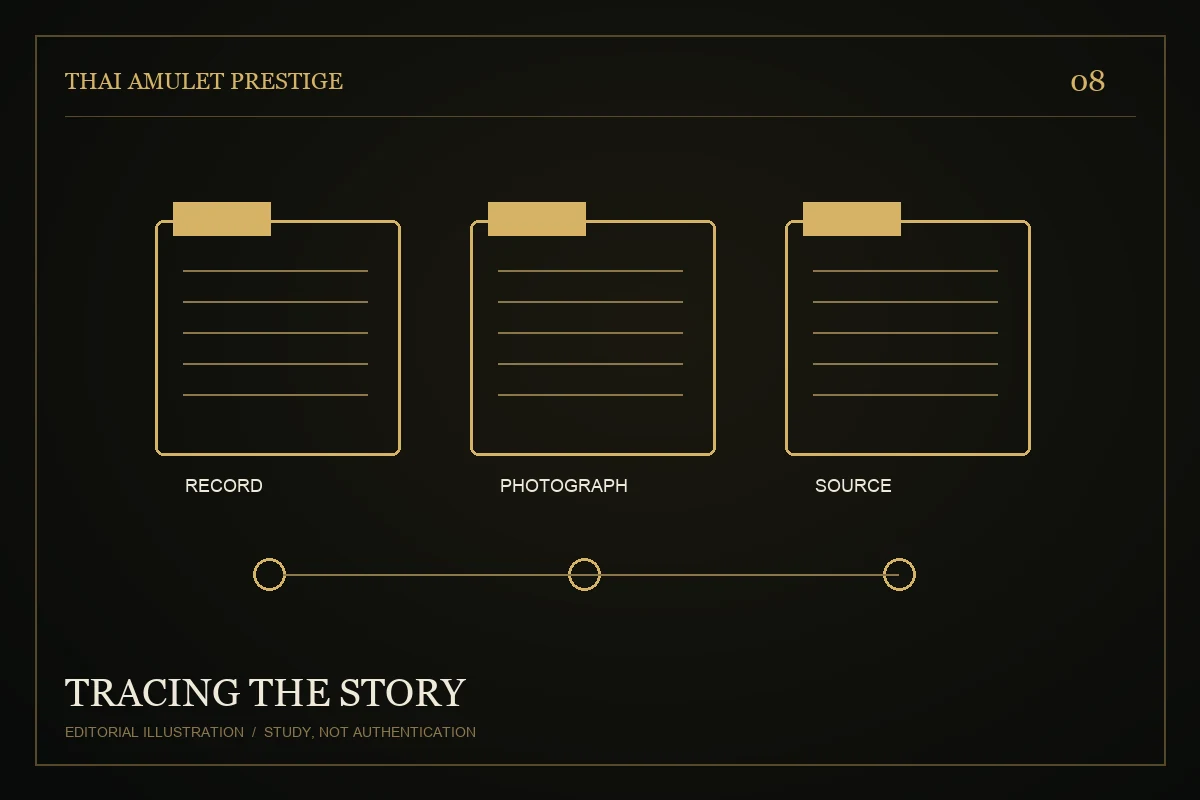
Ask which source records its recovery or acquisition, whether photographs or documents accompany that specific object and where the narrator obtained the information. Initially record colour and surface as observations rather than explanations.
Ket Chaiyo: form alone does not settle origin
The encyclopedia associates Ket Chaiyo with Wat Chaiyo in Ang Thong [1]. Studying the group should therefore include temple information and publications addressing it directly, rather than relying on a similar-looking photograph without a description.
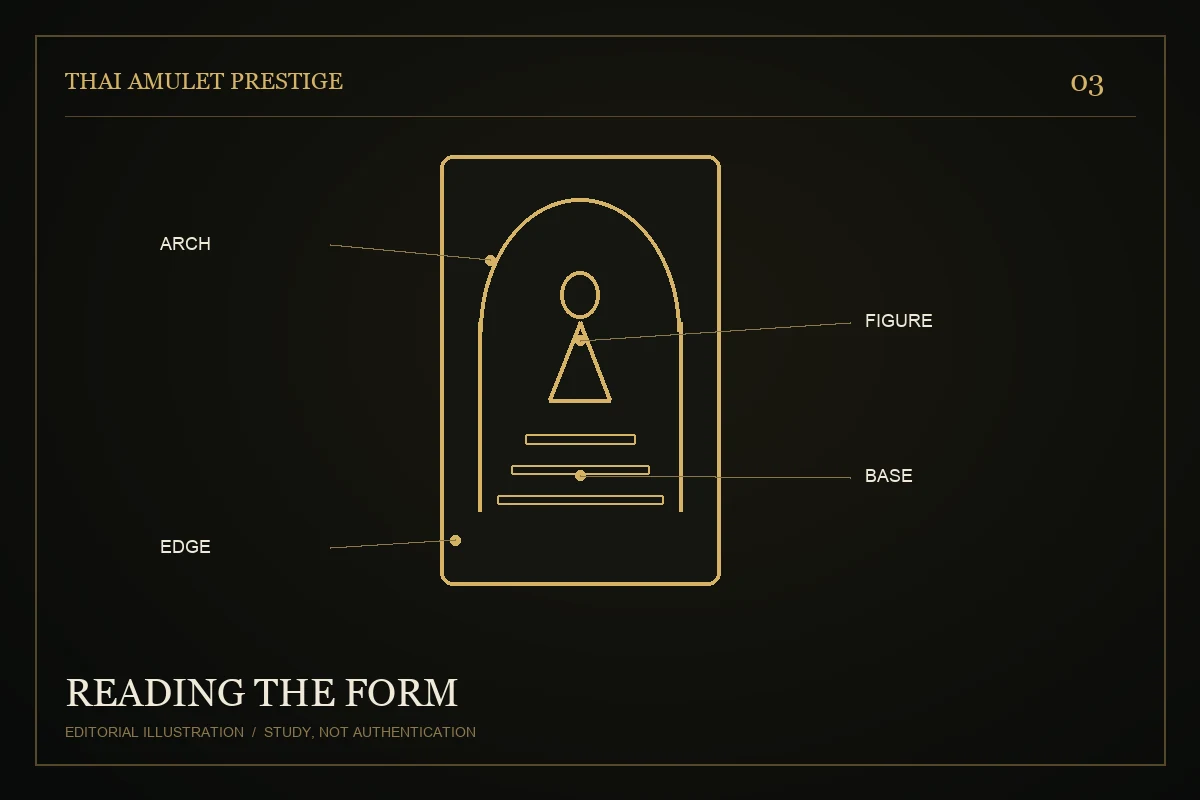
If base tiers differ or a composition resembles an image you remember, record what is visible and check the classification against an identifiable source. Counting tiers in dark or angled photographs can introduce errors at the observation stage.
Compare groups without mixing their histories
The editor suggests separate columns for the group claimed, reference, document date, accompanying images and unresolved questions. This helps avoid unintentionally transferring one group’s description to another.
ICOM’s Object ID guidance covers materials, dimensions, marks and distinctive features [2]. It can help organise a file, but it is a method of describing and identifying objects, not a formula certifying an amulet’s place of production.
Can material colour distinguish the groups?
Colour is one observation worth recording. Photographs are affected by lighting and camera settings, and objects may have experienced different environments. Assigning a temple or age from colour alone goes beyond the available information. Use views of several sides together with supporting evidence.
Sources & further reading
- Amulets — Thai Cultural Encyclopedia, Sirindhorn Anthropology CentreAn overview of Somdej terminology and the Wat Rakhang, Bang Khun Phrom and Ket Chaiyo groupings. A compiled reference, not proof about an individual amulet.
- Object ID — International Council of MuseumsFields for identifying objects, photography, descriptions and secure records; not a standard certifying authenticity.
Translated and adapted from the Thai article compiled by Thai Amulet Prestige, using the listed sources and the editor’s study suggestions. This is not an authentication report for an individual amulet. The Thai source edition records its source check as 3 November 2026. Illustrations do not establish an amulet’s age, maker or authenticity.