Key points
- Type names are classification vocabulary, not certificates.
- Begin with the overall composition before examining small details.
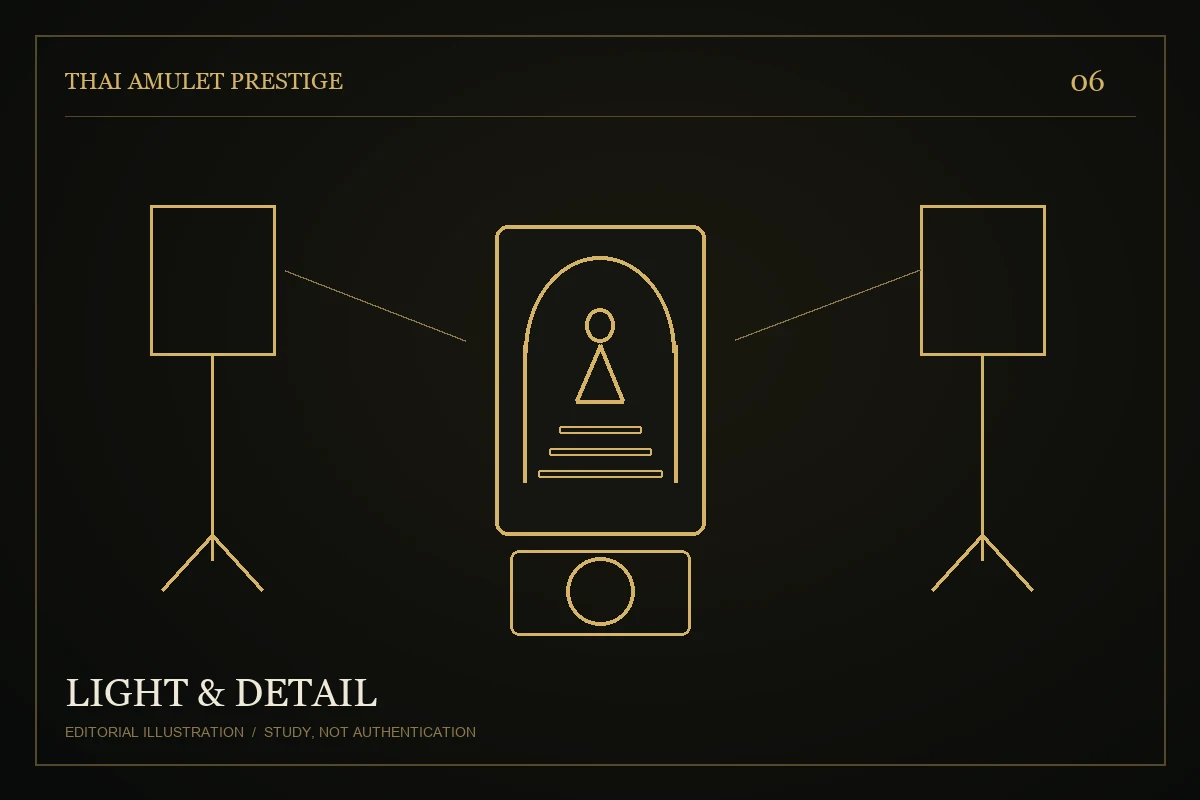
- Compare photographs taken at similar angles and proportions.
How names help describe Somdej Wat Rakhang types
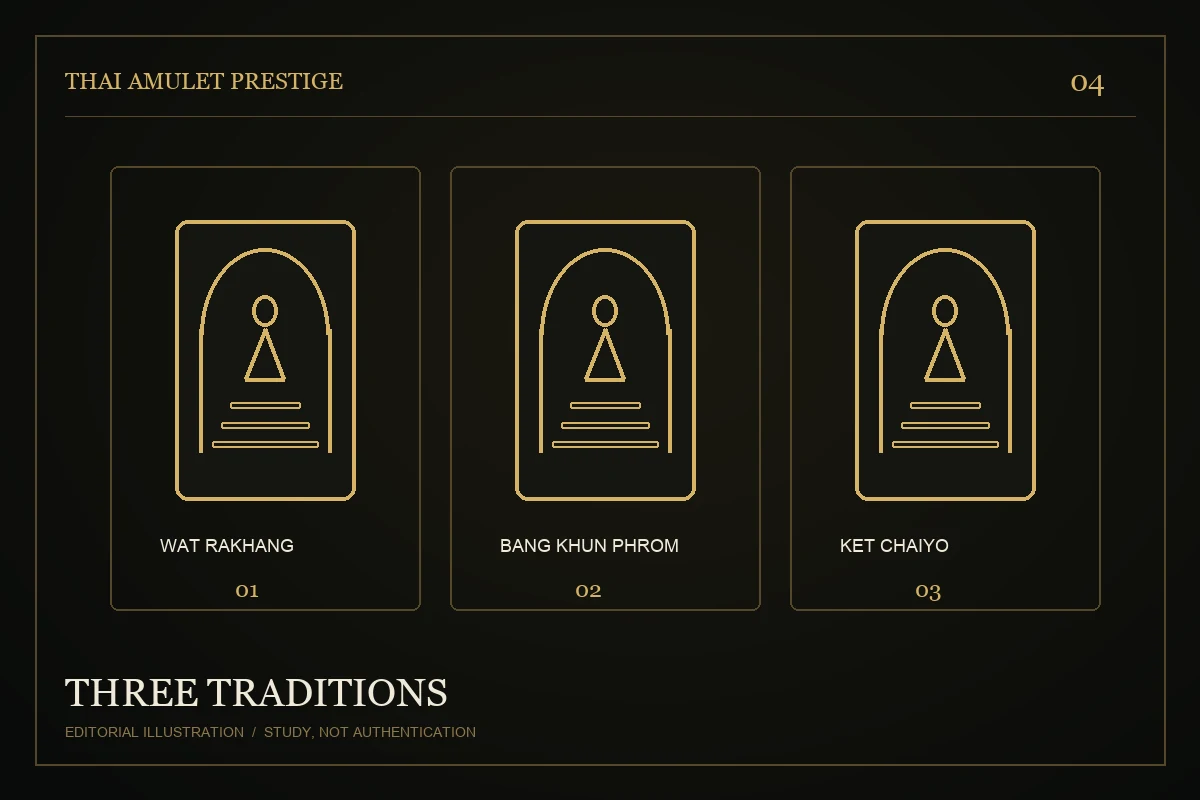
Searching for Somdej Wat Rakhang types can produce many photographs. Beginners should use type names to organise questions rather than reach an immediate verdict. Thai PBS NOW lists names including Phim Yai, Phim Song Chedi, Phim Ket Bua Tum, Phim Than Saem and Phim Prok Pho [1]. These are cited as terms used in that contemporary article, not a declaration that every school of classification agrees.
If two sources use different sub-type names, record each name and who uses it. Avoiding a forced match at the outset reduces confusion when reading several books.
Observe the larger components first
Try describing what is visible before naming a type: the overall outline, the Buddha figure’s position within the arch, the relationship of the base to the border and the empty space at the sides. This is the editor’s observation exercise, not a list of authenticating features.
In an angled photograph, one side can look narrower because of the viewpoint. Do not infer symmetry from a single image. Even a photograph that appears frontal should be checked for camera tilt or close-range lens distortion.
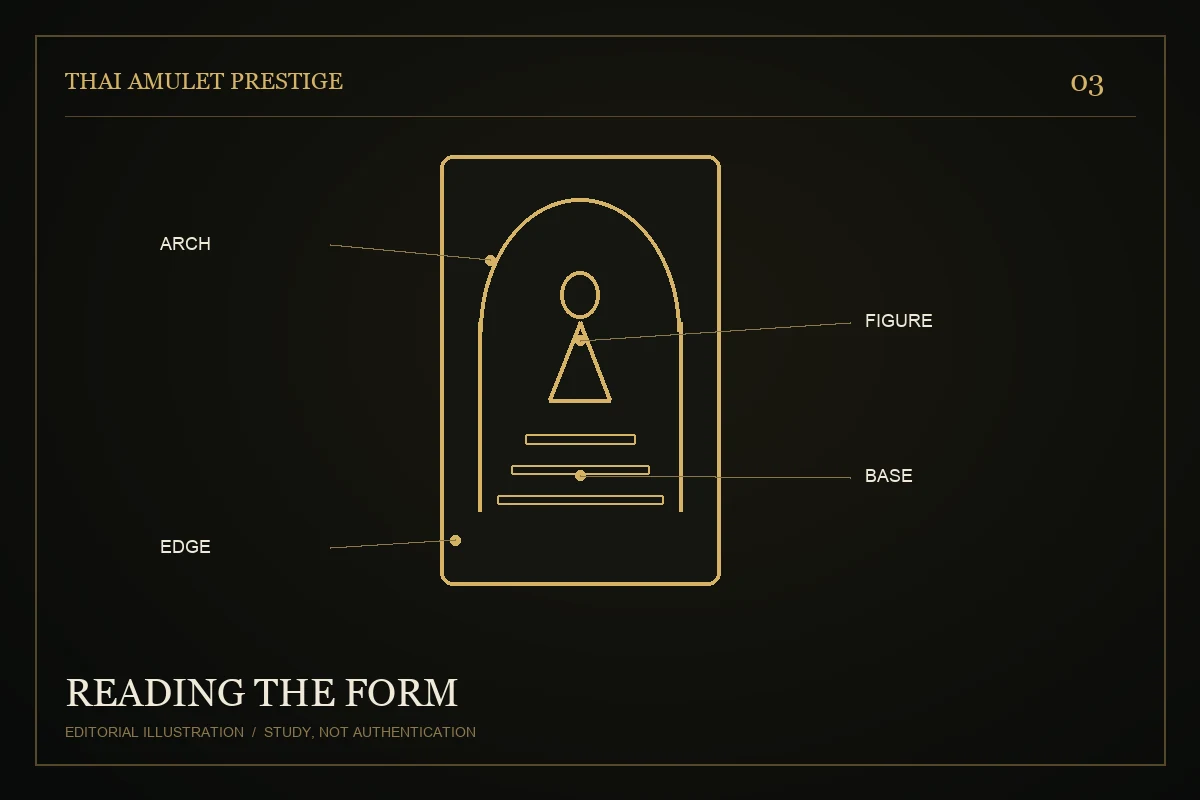
Record the arch, figure, base and edges
A useful observation table allows “not visible” and “cannot yet conclude”, especially for small, worn or frame-covered areas. Do not describe a line merely because you expect it to be present.
- Arch: its course and position relative to the edge, including incomplete areas.
- Figure: proportions actually visible and details concealed by shadow or reflection.
- Base: visible tiers, spacing and damaged areas, without assigning an age.
- Edges and reverse: outline, thickness and areas needing additional photographs.
One matching detail does not identify the whole object
A memorable reference image can lead viewers to search only for familiar features while overlooking inconsistencies. Record both similarities and unexplained differences, using original images with clear sources.
A description can fit several similar amulets. Shared features should not be treated as an individual identification code. Establishing that two records show the same piece requires a combination of distinctive features, information and documents.
Build a useful reference image set
Choose images whose owners permit their use and whose descriptions are clear. Keep the link, publisher and access date. Do not rely exclusively on heavily colour-adjusted or cropped images. If only shop or social-media photographs are available, record that limitation openly.
The illustration in this article explains components. It is not a diagnostic map of an authentic amulet and should not be overlaid on a real object to decide authenticity.
Ask precise questions when a type remains uncertain
Begin with specific requests: is a straight-on front photograph available, or which book is being used for this classification? Clear questions usually provide more useful information than asking for an authenticity verdict from one small image.
Sources & further reading
- Somdet To Phrommarangsi — Thai PBS NOWFive commonly used type names in a contemporary media article; not an authentication standard.
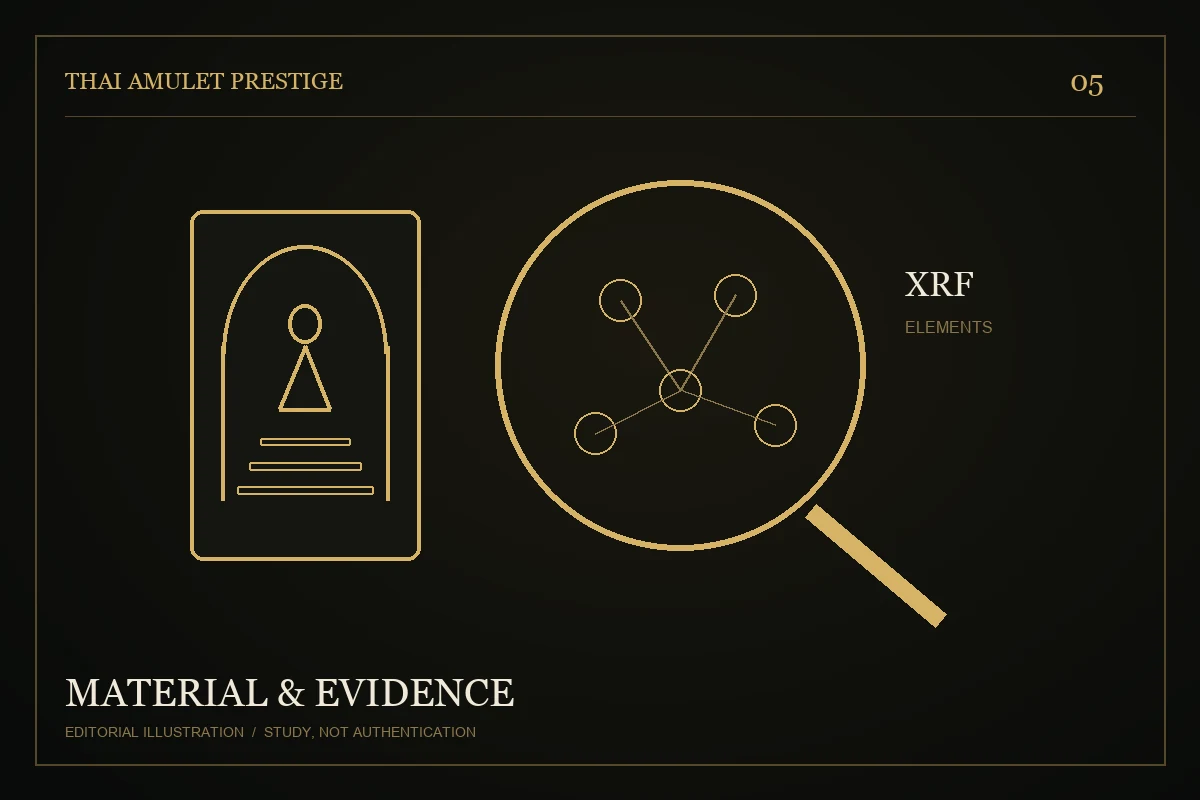
- Object ID — International Council of MuseumsObject identification fields, photography, descriptions and safe record keeping; not an authenticity certification standard.
Translated and adapted from the Thai article compiled by Thai Amulet Prestige, using the listed sources and the editor’s study suggestions. This is not an authentication report for an individual amulet. The Thai source edition records its source check as 3 November 2026. Illustrations do not establish an amulet’s age, maker or authenticity.