Key points
- Photograph the whole object before taking close-ups.
- Keep lighting, colour and camera angles consistent for comparison.
- Store original files separately from edited publication images.
Set the purpose of Somdej amulet photography
Useful Somdej amulet photography starts with deciding what an image should explain. Dramatic golden lighting creates atmosphere, while documentation photographs should record detail and colour carefully. Keep the two kinds separate and describe their purpose.
The Canadian Conservation Institute explains that object photography involves lighting, camera settings, colour and file management together [1]. This article adapts that approach for personal amulet records. It does not claim that one set of photographs can determine authenticity.
Make the working area safe first
Use a stable table and a clean, non-abrasive support, keeping the working area away from the table edge. Avoid propping an amulet upright without a stable support. If it already has cracks or loose powder, assess its fragility before turning it repeatedly to complete a set.
If removing a frame is difficult, photograph the framed object first and state which areas are obscured. Do not force removal just to take a photograph. A safer option may be to have an experienced person assist with positioning at an appropriate time.
Begin with an understandable, repeatable set
This is a suggested sequence for repeatable work. Use the same object ID across every file and maintain a consistent top-to-bottom orientation.
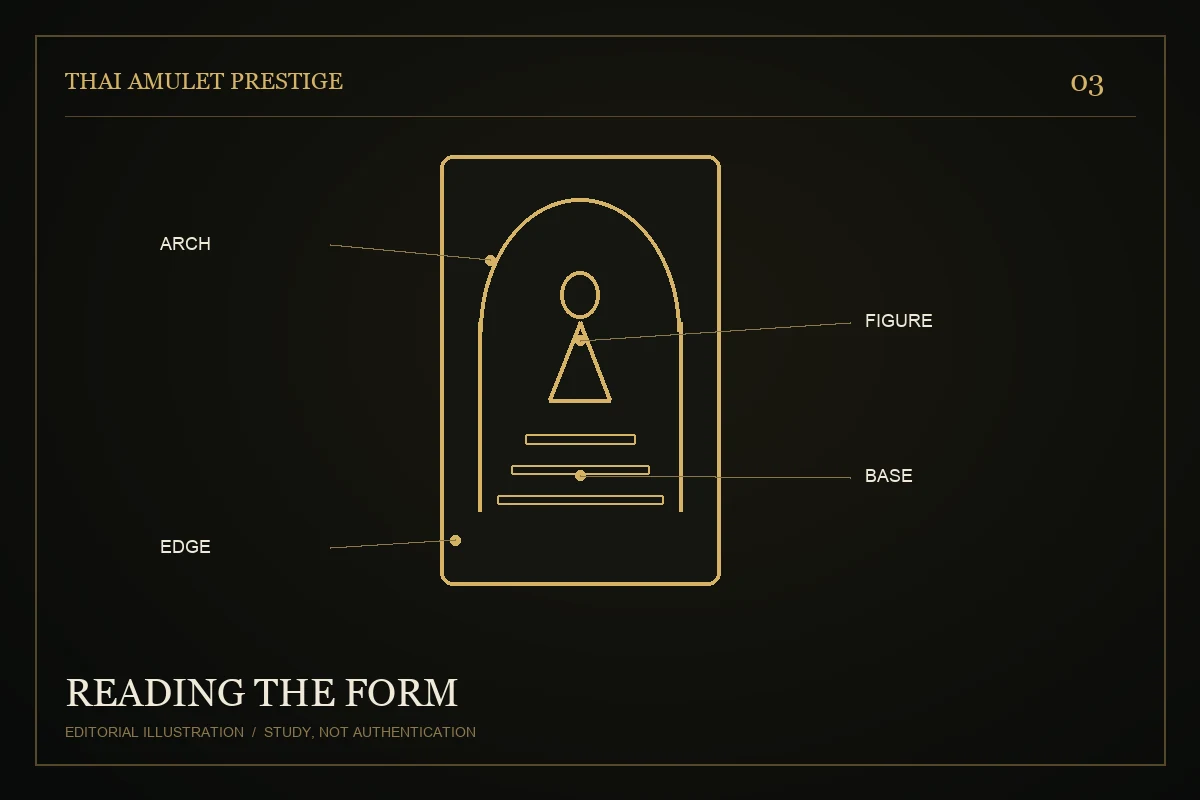
- Straight-on front and reverse views with complete edges; do not crop out unattractive areas.
- Edge views that can be photographed safely, with directions clearly identified.
- An overall view with a scale placed in a similar plane, without pressing on the object.
- Close-ups of areas in question, accompanied by an overall image locating them.
Control lighting and colour for comparison
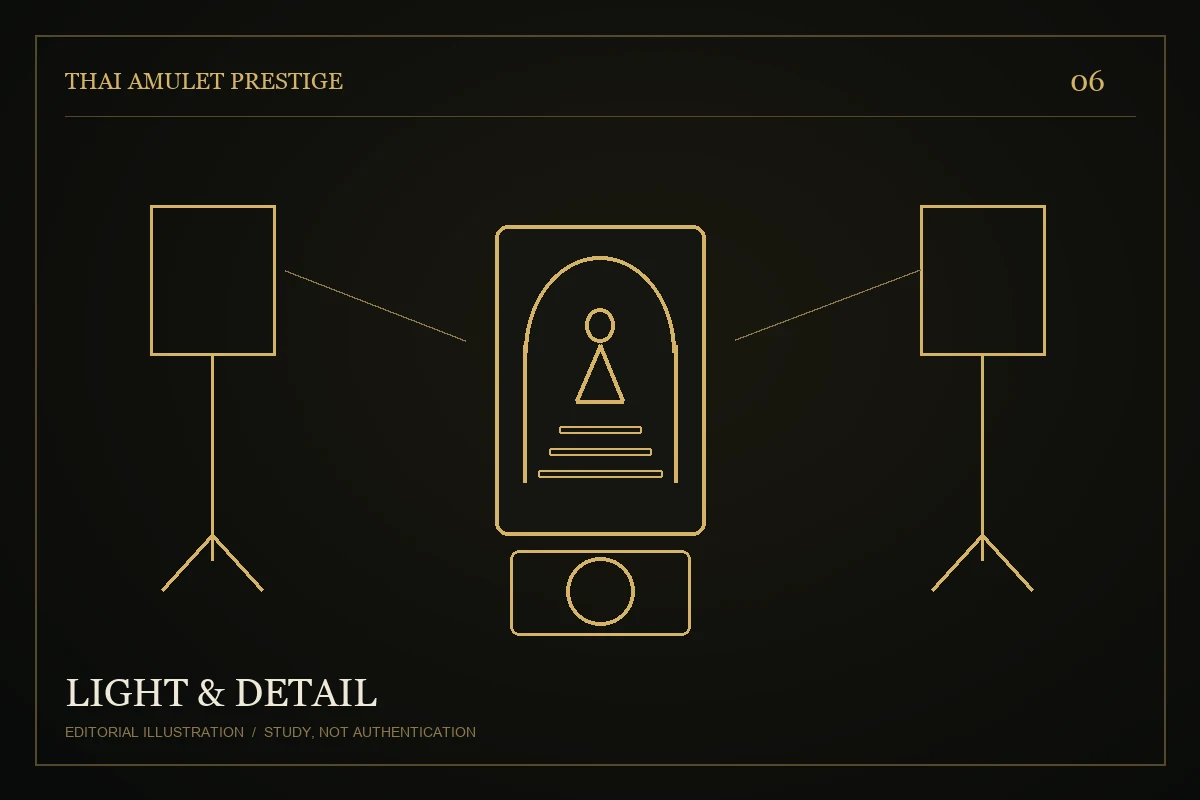
Try soft light for an overall view and an additional oblique-light image to show relief or surface marks. Note when photographs differ because the lighting changed. Do not select only images that hide significant marks. Record colour consistently and include a colour reference when suitable equipment is available.
CCI also provides a publication record for a guide to lighting museum objects [2]. Expensive equipment is not a prerequisite. Begin with sharp, complete, steady images and check that bright areas do not obscure the detail being described.
Keep originals and disclose adjustments
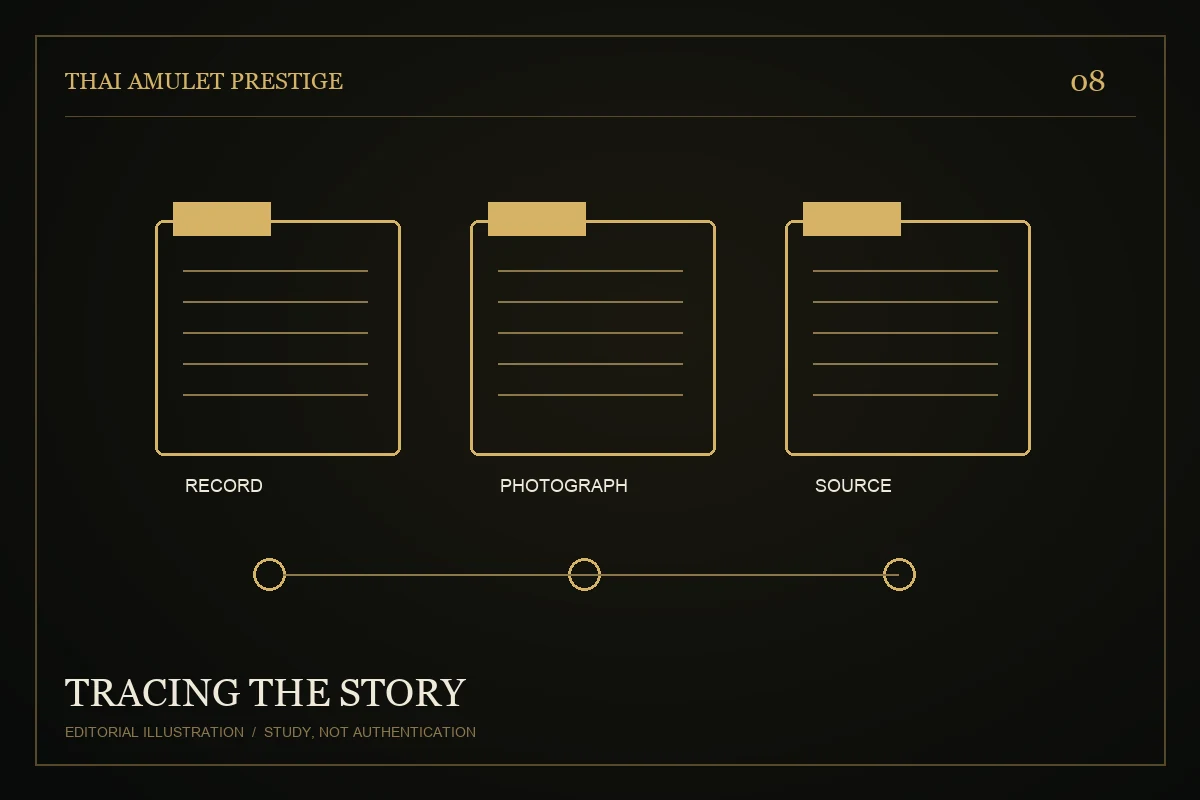
When cropping or changing brightness or colour balance for a website, retain the original and use distinct filenames, such as ID_front_date_original and ID_front_date_web. Do not remove marks, repair missing areas or generate extra details with image tools and then present the result as a condition record.
Illustrations made to explain an idea can be useful when clearly labelled. Separate them from photographs of the actual object in both captions and storage so readers and future website editors do not confuse them.
Check the set before sending it
Open full-size files to check focus, confirm the IDs and ensure all sides show the same object. Identify images taken on different dates. A specific request such as “Please comment on this area; the right edge is not yet photographed” is more useful than sending an isolated close-up and requesting a verdict on the whole piece.
Sources & further reading
- Digital Photodocumentation of Museum Objects — Canadian Conservation InstituteThe importance of lighting, colour, focus and image-file management in object documentation.
- Lighting methods for photographing museum objects — Government of CanadaLighting affects the visibility of detail. This is a publication catalogue record, recommended for further research; no techniques are copied from an unread book.
- Object ID — International Council of MuseumsObject identification fields, photographs, descriptions and safe records; not an authenticity certification standard.
Translated and adapted from the Thai article compiled by Thai Amulet Prestige, using the listed sources and the editor’s study suggestions. This is not an authentication report for an individual amulet. The Thai source edition records its source check as 3 November 2026. Illustrations do not establish an amulet’s age, maker or authenticity.